07.09.2021 – Video – Plastic to Fuel – Pyrolysis Reactor – Produce your own diesel and gasoline for OffGrid living.Part 2
Partie 2 of the Pyrolysis Video Series : TestReactor




Partie 2 of the Pyrolysis Video Series : TestReactor
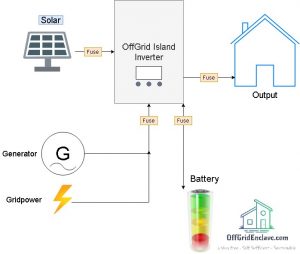
Community requested information with often asked details about “getting Houses with existing grid power OffGrid” bundlet into a short HowTo. https://offgridenclave.com/2021/09/04/how-to-add-a-offgrid-solar-system-to-a-house-that-already-has-grid-power/
Sharing is caring.
Enjoy your day and make it count !
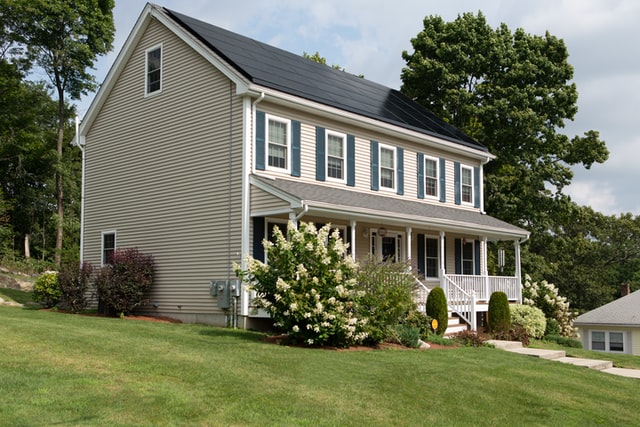
La situation suivante est très fréquente. C'est un problème que nous avons beaucoup évoqué dans la communauté, et pour la plupart des gens dans un environnement semi-urbain, c'est le scénario le plus probable: La maison dispose déjà d'un raccordement au réseau. comme tu veux solaire avoir la possibilité d'être autonome si besoin est, ainsi que des économies considérables sur les coûts d'électricité.
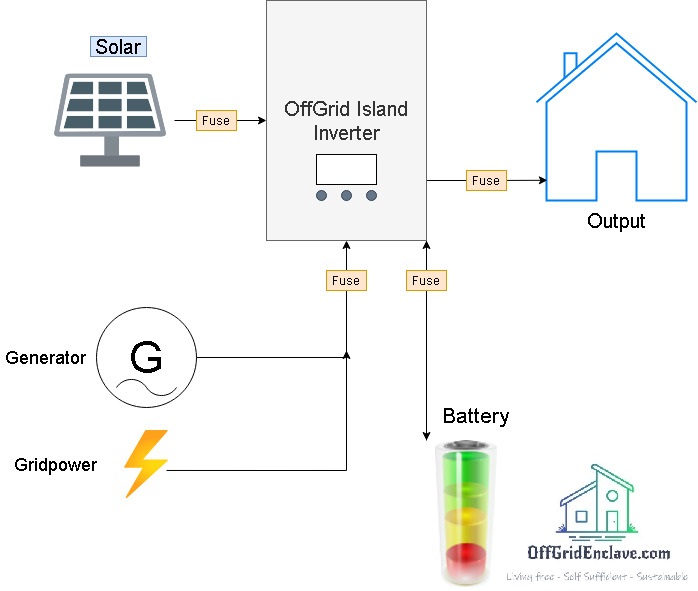
La solution la plus simple pour cela est une configuration OffGrid Island avec une connexion d'entrée de réseau. Il s'agit essentiellement de construire un système solaire autosuffisant avec un la batterie, utilisant un Unités OffGrid-AllinOne pour ensuite connecter le réseau électrique existant au système. Cela permet également une connexion facile d'une essence Générateur.
Il y a 2 principaux types d'OffGrid-AllinOne-Units.
Onduleurs OffGrid Island avec option d'entrée de grille et Onduleurs hybrides.
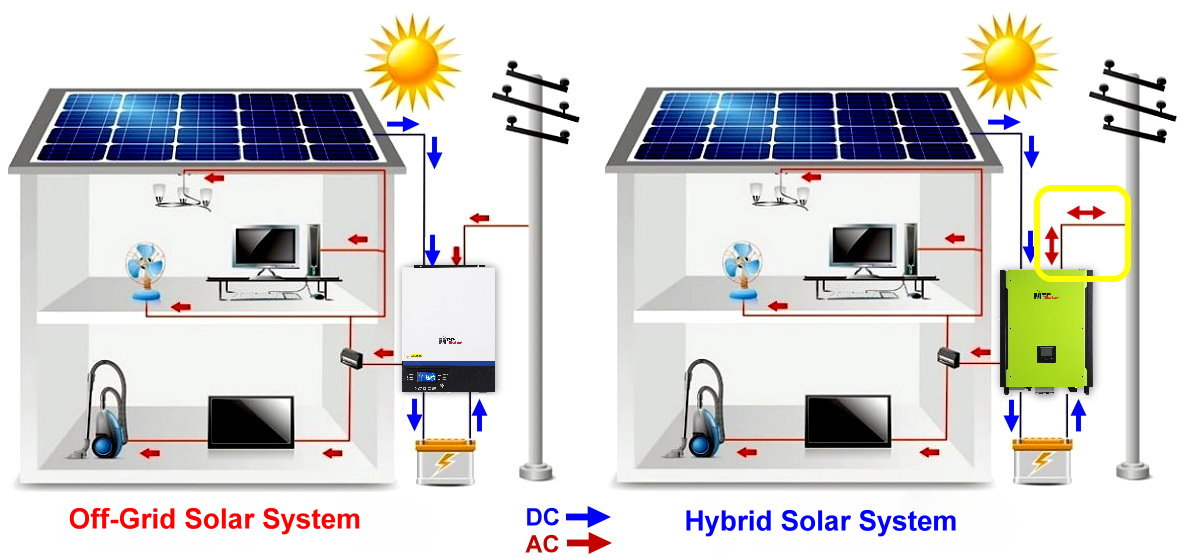
” Alors que les deux systèmes visent à maximiser l'utilisation de l'énergie solaire, leur principale différence réside dans la manière dont ils gèrent le stockage de l'énergie. Dans un Système solaire hors réseau, l'onduleur tentera d'utiliser l'énergie solaire pour "l'autoconsommation" en l'envoyant directement pour charger ou l'utiliser pour charger la batterie. S'il y a un surplus d'énergie solaire, rien ne sera fait car il n'y a tout simplement plus de place pour le stockage d'énergie.
D'autre part, une Système solaire hybride tentera toujours de maximiser l'utilisation de l'énergie en chargeant ou en chargeant la batterie, et toute puissance excédentaire sera simplement "injectée" dans le réseau, qui agissent comme un stockage d'énergie presque illimité. “(1)
Dans de nombreux pays, l'injection d'énergie solaire dans le réseau à l'aide d'un onduleur hybride nécessitera une sorte de paperasse et de permis légaux. Assurez-vous de bien vérifier votre situation juridique avant d'installer un onduleur hybride.
Aller avec une configuration OffGrid Island avec une connexion d'entrée de réseau est plus souvent la solution la plus simple, car il n'est pas nécessaire de toucher à l'électricité de la maison existante pour l'installer et la faire fonctionner. L'entrée du réseau peut se faire avec une prise normale. On branche simplement la configuration OffGrid Island dans le système électrique existant de la maison comme n'importe quel autre appareil domestique.
L'utilisation de l'un de ces appareils permet également d'avoir un retour transparent à l'alimentation du réseau en cas d'absence d'énergie solaire et de batterie vide.. La plupart des onduleurs OffGrid Island auront des options de configuration détaillées sur la source d'alimentation principale, source de secours et autres.
Cette vidéo détaille les options de configuration pour un onduleur Mpp-Solar OffGrid Island. La plupart des autres marques solides comme Victron auront des options similaires mais éventuellement des applications différentes pour l'interaction.
Si vous avez des questions, idées ou commentaires ne soyez pas timide…. rejoignez notre Un merci spécial à Sylfix, membre de la communauté OffGridEnclave, pour avoir fourni des photos et des informations pour le présenter en tant que projet.

(1) La source: https://www.mppsolar.com/v3/product-overview/