Skip to content

OffGridEnclave.com

Living free - Self Sufficient - Sustainable

  • Home
  • Knowledge
  • Projects
  • Community
  • Other
    • News
    • Media
    • Donations
    • About
    • Contact
    • Privacy Policy
    • Log In
      • Forgotten Password ?
  • Home
  • Knowledge
  • Projects
  • Community
  • Other
    • News
    • Media
    • Donations
    • About
    • Contact
    • Privacy Policy
    • Log In
      • Forgotten Password ?

TheHappyBunker

TheHappyBunker

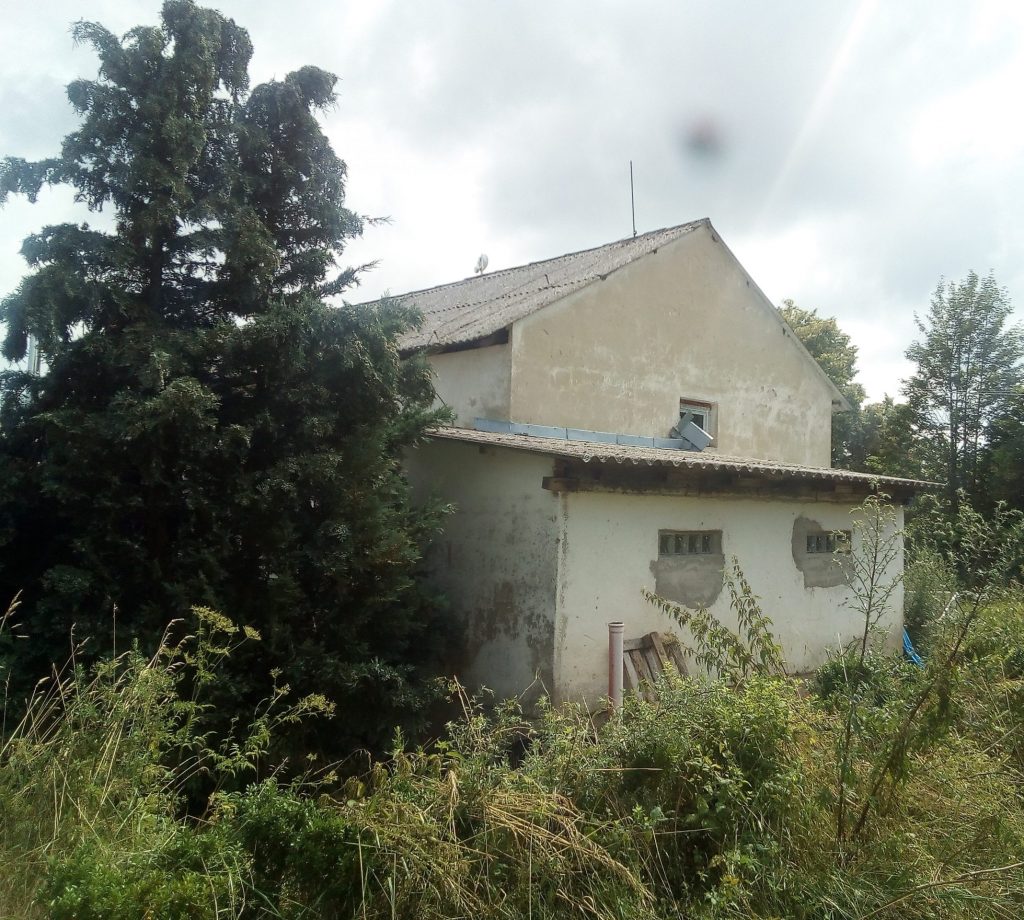
A rather large OffGrid Project.


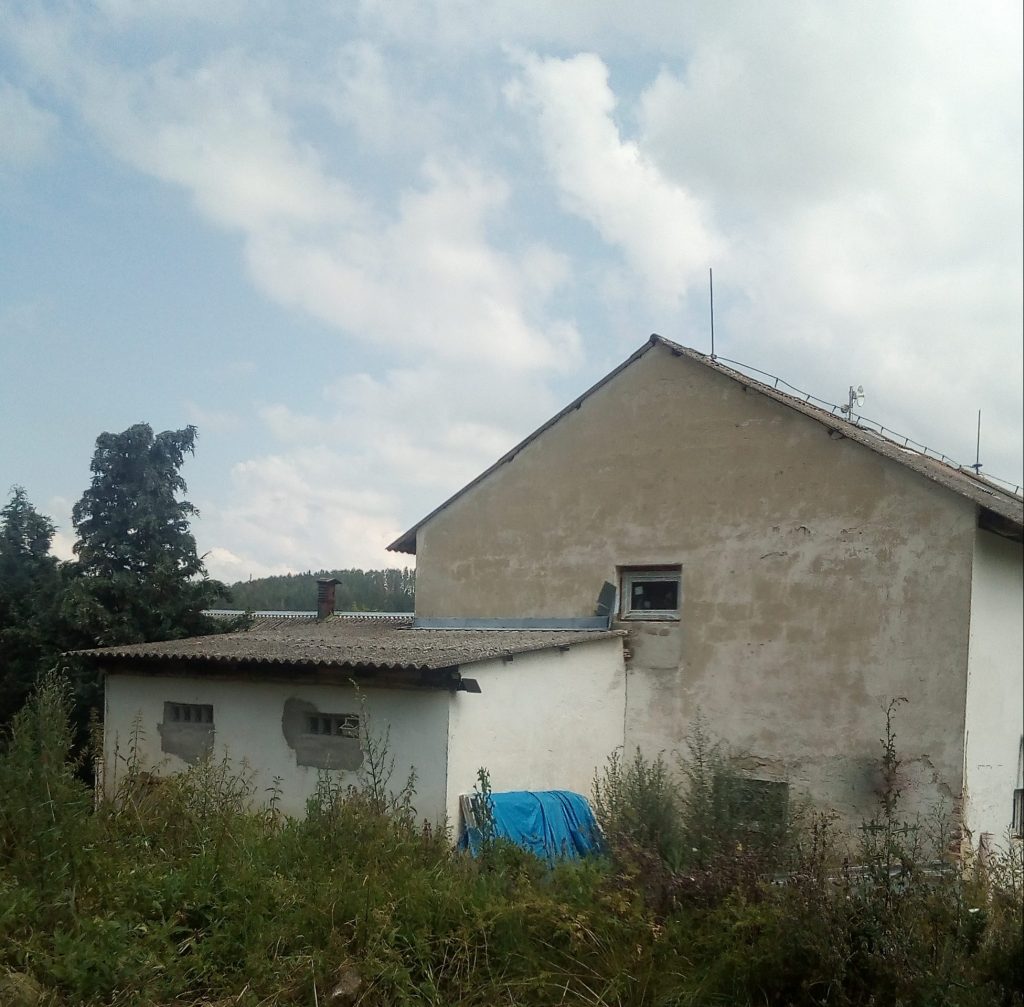
Welcome to TheHappyBunker, a ambitious off-grid undertaking in Central Europe. Tucked away in the rugged Czech Mountains, this project spans an impressive chunk of land. Built to withstand the elements, the heavy duty structure utilizes solid and enduring materials to create a secure, permanent, and entirely self-sufficient enclave for sustainable living

Size of land : ~ 15.000m²
Structure size: ~ 550m²
Living space: ~400m²
Location: Central Europa, Czech Mountains
Building materials used : ~ Concrete 70%, Bricks 15%, Steel 10%, 5% Wood.

An undertaking of this scale doesn’t happen by accident. Bringing TheHappyBunker to life required years of intense planning, extensive research, and a steep learning curve in practical engineering. From calculating and testing battery storage configurations to mastering construction skills, every single component was researched to ensure absolute reliability. Moving from a predictable city lifestyle to the rugged realities of the wilderness was an extraordinary adventure…Challenging, unpredictable, and deeply enjoyable. Every mistake along the way became a valuable lesson, turning the steep transition from urban reliance to rural independence into the most rewarding project of our lives.


Power System

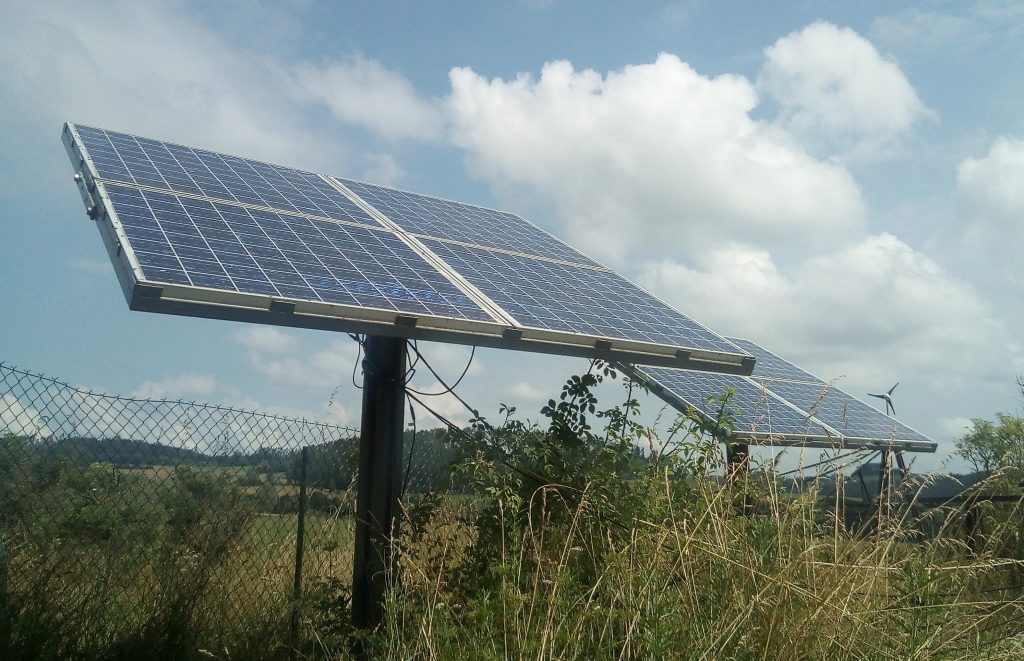
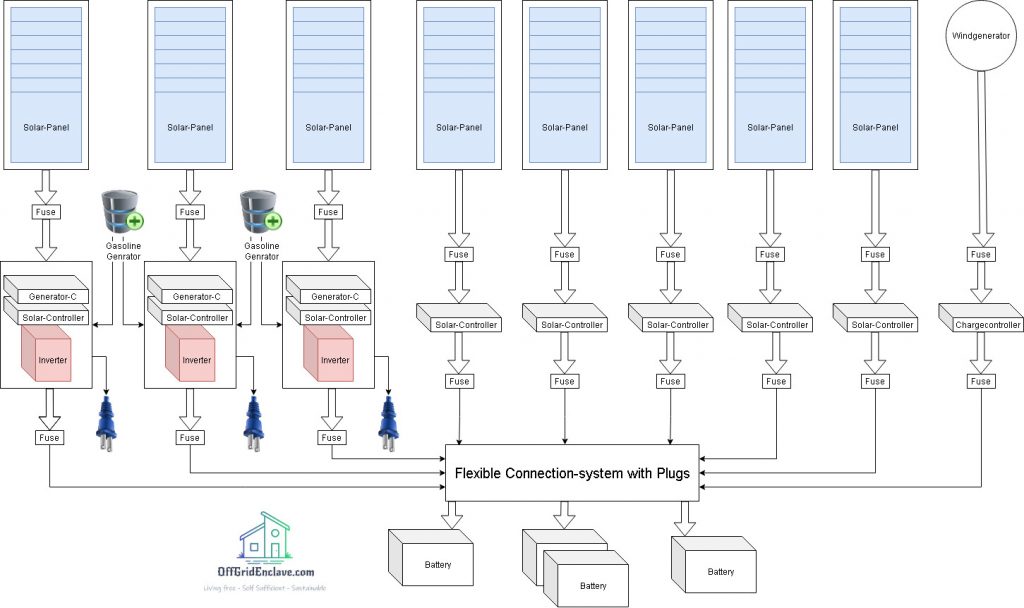
True energy independence requires redundancy, and our robust hybrid power grid delivers exactly that. The backbone of the bunker features a massive solar panel array paired with a wind generator to catch mountain breezes. Energy is stored in large deep-cycle lead-acid battery banks. For prolonged winter storms or peak loads, dual multi-phase and single-phase gasoline generators stand ready to back up the system.

19.000 Watt in Solar Panels
400 Watt Wind Generator
3x DeepCycle LeadAcid Batteries
24V : 1150 AH c5, 740 AH c5
48V: 360 AH c5
2x High Frequency Inverters 2,4 Kw – Mpp-Solar (since 2014)
1x High Frequency Inverter 6 Kw – Datou Boss DT-4860BF (since 2026)
3,6 Kw Gasoline Generator Multiphase 220/400 Volt
3,2 Kw Gasoline Generator Singlephase 220 Volt

Water

Water security is non-negotiable when living off the grid. Our primary water supply is sourced directly from a private well drilled deep into mountain bedrock, powered efficiently by a 450-watt pump. To conserve this precious resource, we also utilize a secondary rainwater harvesting system that channels runoff into twin 1000-liter storage barrels, keeping our agricultural projects hydrated all summer long.


Heating

Surviving cold mountain winters demands serious thermal engineering. The Happy Bunker utilizes two heavy-duty heating systems . A 25 kW stove handles traditional logs and coal, while a sizable 28 kW automated system runs on pellets or coal to feed a central water heating cycle. This configuration efficiently splits energy between active water piping and radiant air warmth to keep the entire living space perfectly conditioned.

25 Kw Stove for logs or coal brickets. -> heatexchanger to heat water cycle ( 19/6 Kw for Water/Air).
28 Kw Automated. Heating for pellets, coal or logs. -> heatexchanger to heat water cycle ( 26/2 Kw for Water/Air).


Communications

Going off-grid doesn’t mean going offline. The Happy Bunker stays fully connected to the digital world via a triple-redundant network architecture. In the rare event both terrestrial links fail, an cellular connection keeps us linked to our community and the globe.

Internet:
Primary, 50/50 Mbit directional Wifi.
Secondary, 8/1 Mbit directional Wifi.
Backup, 18Mbit G5.


Food – Livestock
Our intensive vegetable garden forms the front line of our dietary self-reliance. We cultivate a diverse yield of fresh tomatoes, cucumbers, broccoli, and dark leafy greens alongside deep beds of hardy Jerusalem artichokes and even a small tobacco patch. A flock of chickens provides daily fresh eggs and natural pest control. While we still use local farmers’ markets to supplement our pantry, our infrastructure is fully designed to scale up livestock production whenever necessary.

Vegetable garden, about 150m²:
Tomatoes, Cucumber, Broccoli, Kitchen herbs, Coli flower, kale, Berries, Fruit Trees,
Tobacco about 5m²
Jerusalem artichoke [wiki link] 18 m²
Chickens
(option for more livestock if need be)
Local farming markets
Local supermarket


Ultimately, TheHappyBunker is more than just a survival structure; it is a gateway to a reset life. Stepping away from the constant noise of the modern grid allows the mind and soul to find a rare, profound sense of balance. There is an unmatched clarity that comes from living in sync with the elements. Watching the weather directly dictate your daily power harvest and therefore options, and relying on water drawn straight from the earth beneath your feet. By aligning our daily rhythms with the natural world rather than fighting against it, life becomes simpler, happier and genuinely grounded.


For questions or input join our community discord server.

  • (0) Comments
  • By
  • Projects

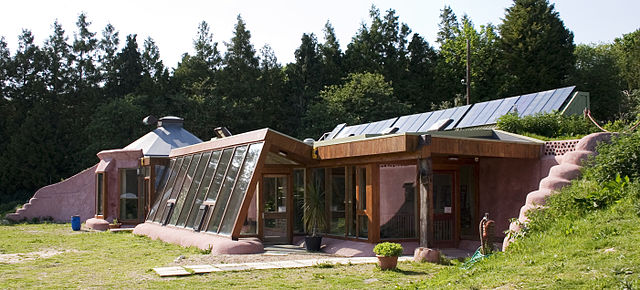
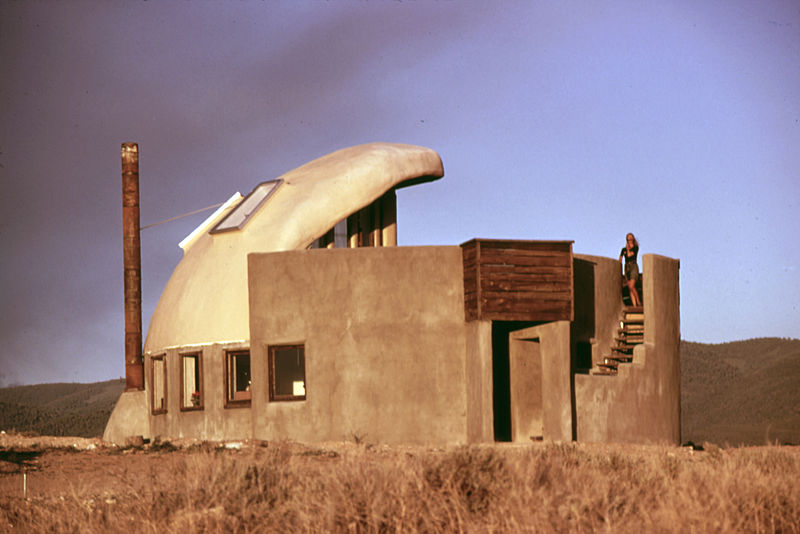
Earthships


Earthships

One of the first approches in the “new age” for a sustainable offgrid setup. Michael E. Reynolds the original mind behind the idear dedicated a good portion of his life to this. He is a proponent of “radically sustainable living”.
Often has he been a critic of the profession of architecture for its adherence to conventional theory and practice.
He advocates the reuse of unconventional building materials.
The Earthship architecture concept began to take shape in the 1970s.
Designt to be build with very low skill-level and to work in all enviroments.
Check out his YouTube channel for a lot of very good video ressources how to build, what materials to use, etc.
https://www.youtube.com/user/earthship/videos
https://en.wikipedia.org/wiki/Mike_Reynolds_(architect)
https://en.wikipedia.org/wiki/Earthship

Earthship should be considert an insperation for everyone going OffGrid.
Eco friendly in about any way possible. Suitable for all enviroments.


Earthships are predicated upon the idea that there are six human needs which can be addressed through environmentally sustainable building design:

  1. Energy: Thermal and/or solar heating and cooling, solar and wind electricity
  2. Garbage management: Reuse and recycling built into construction and daily living
  3. Sewage treatment: Self-contained sewage treatment and water recycling
  4. Shelter: Building with natural and recycled materials
  5. Clean Water: Water harvesting and long term storage
  6. Food: In-home organic food production capability

.

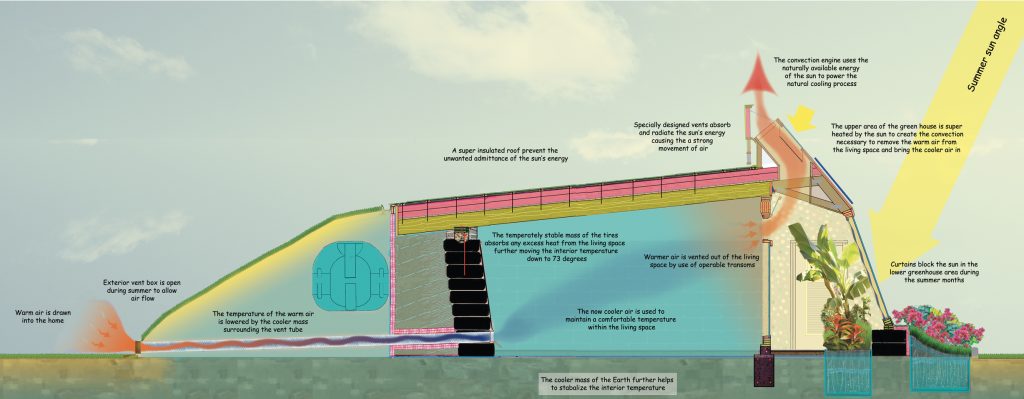
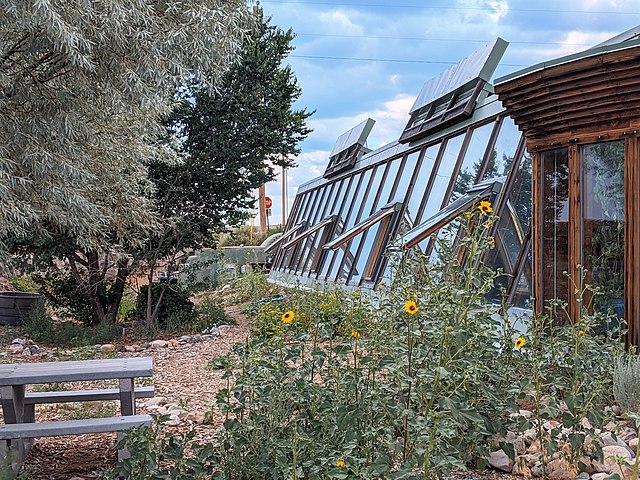
The buildings are often horseshoe-shaped due to the difficulty of creating sharp 90 degree angles with rammed tires. In Reynolds’s prototype at Taos, the opening of the horseshoe faces 10–15 degrees east of south to maximize natural light and solar-gain during the winter months, with windows on sun-facing walls admitting light and heat.

The book, Earthship I, describes how to find the best angle depending on the building’s geographic location. The thick and dense walls provide thermal mass that naturally regulates the interior temperature during both cold and hot outside temperatures. The outer walls in the majority of Earthships are made of earth-rammed tires, but any dense material with a potential to store heat, such as concrete, adobe, earth bags, or stone, could in principle be used to create a building similar to an Earthship. The tire walls are staggered like traditional brick work, and often have “concrete half blocks” every other course, to equal the length of the staggered tire below. In an effort to cut down the use of concrete even further, they also use “squishies” – tires rammed in between a tight space to even out the course or to compensate for varying tire size.

.

The rammed earth tires of an Earthship are assembled by teams of two people. One person shovels dirt and places it into the tire one scoop at a time. The other person, who stands on the tire, uses a sledgehammer to pack the dirt in while moving in a circle around the tire to keep the dirt even and to avoid warping the tire. Rammed earth tires can weigh up to 300 lb (140 kg), so they are typically filled in place. Because the tire is full of soil, it does not burn when exposed to fire. In colder climates, extra insulation is added on the outside of the tire walls.
Tires rammed with earth and stacked

On top of the tire walls are either “can and concrete bond beams” made of recycled cans joined by concrete, or wooden bond beams with wooden shoes. These are attached to the tire walls using concrete anchors, poured blocks of concrete inside the top tires. Wooden shimming blocks placed on top of the wooden bond beam make up the wooden shoes. The wooden bond beam consists of two layers of lumber bolted on to the concrete anchors. Re-bar is used to “nail” the wooden shoes to the wooden bond beam.

Internal, non-load-bearing walls are often made of a honeycomb of recycled cans joined by concrete; these are nicknamed tin can walls. These walls are usually thickly plastered with adobe, and resemble traditional adobe walls when finished.

The roof is made using trusses, or wooden support beams called vigas, that rest on the wooden shoes or the tin can walls placed on the bond beams. The roof as well as the north, east and west facing walls are heavily insulated to reduce heat loss.

.

Earthships are designed to catch all the water they need from the local environment. Water used in an Earthship is harvested from rain, snow, and condensation. As water collects on the roof, it is channeled through a silt-catching device and into a cistern. The cisterns are positioned to gravity-feed a water organization module (WOM) that filters out bacteria and contaminants, making it suitable for drinking. The WOM consists of filters and a DC-pump. Water is then pushed into a conventional pressure tank to create common household water pressure.

Water collected in this fashion is used for every household activity except flushing toilets. The toilets are flushed with greywater which has been used at least once already. Typically it is filtered waste-water from sinks and showers.
An interior botanical cell; the plants function as water treatment for graywater

Greywater, recycled water unsuitable for drinking, is used within the Earthship primarily for flushing toilets. Before the greywater can be reused, it is channeled through a grease and particle filter/digester and into a 30–60 in (760–1,520 mm) deep rubber-lined botanical cell, a miniature living machine, within the Earthship. Here the water is oxygenated and filtered using bacteria and plants to reduce the nutrient load. Water from the low end of the botanical cell is directed through a peat moss filter and collected in a reservoir or well. The reclaimed water is passed once more through a greywater board and used to flush conventional toilets.

Black water is water that has been used in a toilet. Earthships utilize anaerobic digestion in their septic tanks, which naturally separate solid waste. The black water is used in concrete cells containing plants, separate from the grey water plants in the greenhouse; it may also be used in exterior planters. Studies on the safety of growing food plants in a black water system show low levels of E. coli bacteria. It is not recommended to plant edibles in black water; building permits may be refused for plans indicating such usage of black water.

Where it is not possible to use flush-toilets operating on water, dry solar toilets are recommended.

.

Earthships are designed to collect and store their own energy. The majority of electrical energy is harvested from the sun and wind. Photovoltaic panels and wind turbines on or near the Earthship generate DC electricity that is stored in deep-cycle batteries. The batteries are housed in a purpose-built room on the roof. Additional energy can be obtained from gasoline-powered generators or by integrating with the city grid. For Canadian winters the solar cell exposed surface areas needs to be increased by over three times.

In an Earthship, a Power Organizing Module (POM) takes a proportion of stored energy from batteries and invert it for AC use. The Power Organizing Module is a prefabricated system provided by Earthship Biotecture that is simply attached to a wall on the interior of the Earthship and wired in a conventional manner. It includes the necessary equipment such as circuit breakers and converters. The energy run through the Power Organizing Module can be used to run any household appliance including washing machines, computers, kitchen appliances, print machines, and vacuums. Ideally, none of the electrical energy in an Earthship is used for heating or cooling.

.


  • (0) Comments
  • By
  • Projects

© 2020-2026 All Rights Reserved | OffGridEnclave.com

This website uses cookies to improve your experience. We'll assume you're ok with this, but you can opt-out if you wish.
Detailed information on how we use data can be found in the Privacy Policy section.
Cookie settingsACCEPT
Cookies Policy

Cookies Overview

This website uses cookies to improve your experience while you navigate through the website. Out of these cookies, the cookies that are categorized as necessary are stored on your browser as they are essential for the working of basic functionalities of the website. These cookies will be stored in your browser only with your consent. You also have the option to opt-out of these cookies. But opting out of some of these cookies may have an effect on your browsing experience.
Necessary
Always Enabled
Necessary cookies are absolutely essential for the website to function properly. This category only includes cookies that ensures basic functionalities and security features of the website. These cookies do not store any personal information.
SAVE & ACCEPT